ServicesGutters
Gutters in Nichols Hills, Sized for the Water Your Roof Sheds
We install and replace gutters and downspouts on your home. We match the metal and profile to your roof, your trim and the volume of rain your roof actually collects. You hear the trade-offs between aluminum, steel and copper before anything is ordered.
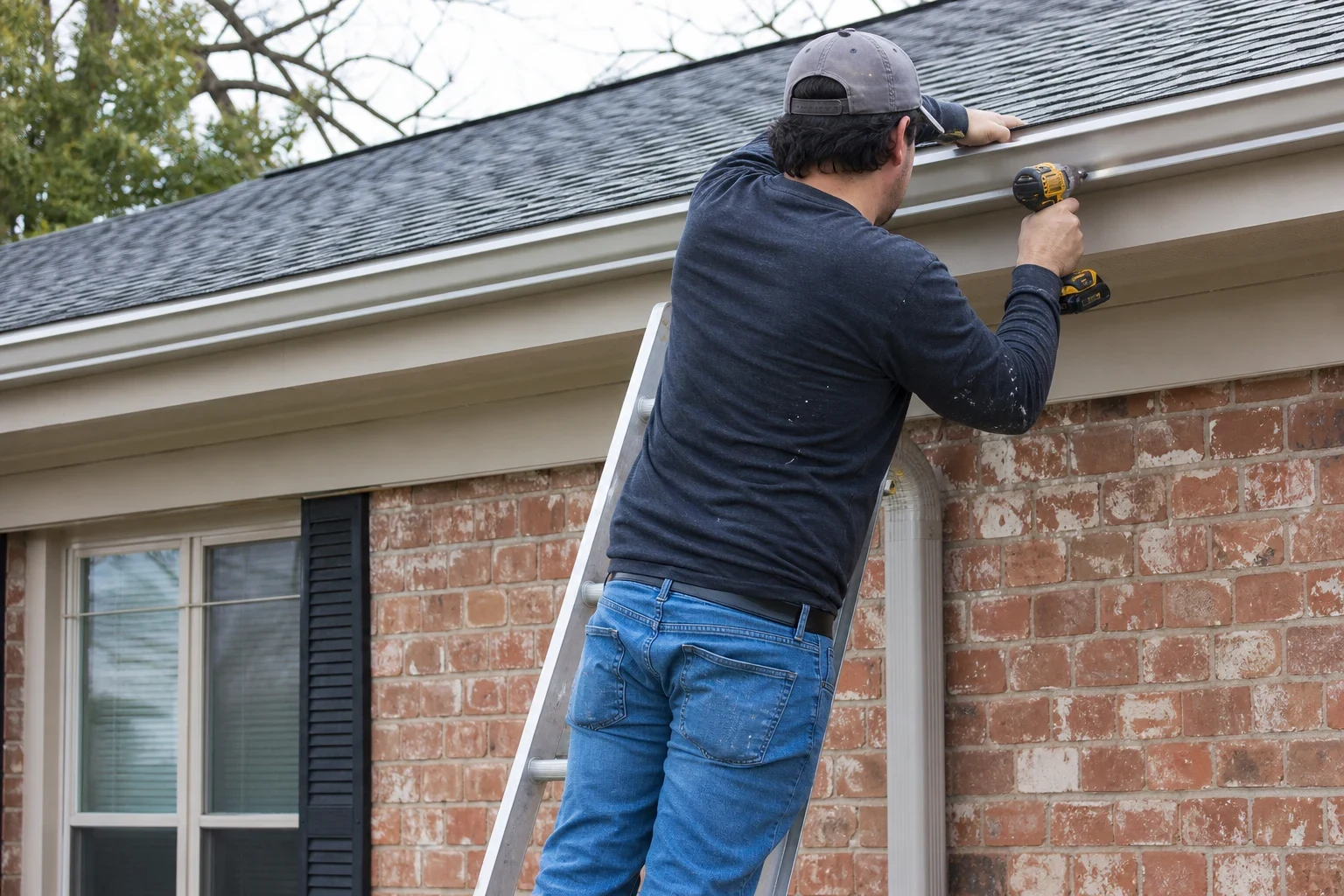
What a Gutter System Is Supposed to Do
A gutter has one job. It catches the water coming off the roof edge and carries it far enough from your home that it never reaches the fascia, the siding or the foundation. When it fails, the damage shows up somewhere else first, as rotted fascia boards, peeling paint, a wet crawlspace or soil washed out along a flower bed.
Most failures trace back to three causes. The gutter is too small for the roof area feeding it, it is pitched wrong so water sits, or the hangers have pulled loose from soft wood. Thunderstorms in central Oklahoma tend to deliver their rain in heavy, concentrated bursts, so we size troughs and downspouts for peak runoff rather than an average shower.
Gutter work sits right at the roof edge, so we look at the drip edge and the last course of shingles while we are there. If the roof itself needs attention, we say so and point you to roof repair or roof replacement instead of hanging new gutters on a failing edge.
What Our Gutter Work Includes
- One-piece aluminum gutters
- Formed on site from a coil to the exact length of each run, so the only joints are at the corners. Fewer joints means fewer places for sealant to dry out and drip. Aluminum is light, does not rust and comes in many baked-on colors to match your trim.
- Steel and copper options
- Galvanized or coated steel stands up better to hail dents and ladder pressure but can rust where the coating is scratched. Copper costs more and needs soldered joints, yet it lasts for decades and weathers to a brown, then green patina that suits many older homes.
- K-style or half-round profiles
- K-style gutters hold more water for their width and fit most fascia boards. Half-round gutters suit traditional architecture and drain clean, but they carry less water and mount on brackets that need careful spacing.
- Downspouts sized to the run
- We often move from 2x3 to 3x4 inch downspouts on long runs or steep roof sections, because a larger outlet clears a heavy downpour before the trough overflows. Extensions or splash blocks carry the water away from the foundation.
- Hidden hangers and fascia check
- Hidden hangers screw through the gutter into the fascia, typically about every two feet, and hold far better than old spikes and ferrules. Before we hang anything, we probe the fascia and replace soft boards so the screws have solid wood to grip.
- Gutter guards when they make sense
- Micro-mesh guards keep out oak tassels and pine needles but need occasional brushing off. Perforated covers are cheaper and stronger against debris yet let fine material through. We tell you which one fits the trees over your roof, or whether you need one at all.
Signs Your Gutters Need Work
Water spilling over the front edge
Overflow during a steady rain points to a clog, a gutter that is too small for the roof area, or downspouts too narrow to keep up.
Sagging or pulling away
A gutter that dips between hangers holds standing water, which adds weight and pulls it lower. Spikes backing out of the fascia usually mean the wood behind them has softened.
Stains, rot or peeling paint below
Dark streaks on siding, flaking paint on the fascia or soft wood at the roof edge show water has been running behind the gutter instead of into it.
Leaking joints and corners
Drips at joints on sectional gutters come from sealant that has cracked after years of heat and cold. Resealing helps for a while, but long sectional runs often justify switching to one-piece runs formed on site.
Washed-out soil near the foundation
Erosion, pooling or a damp crawlspace near a downspout means the water is landing too close to your home and needs an extension or a better discharge point.
What Affects the Price of Gutters
Gutter pricing is mostly linear footage and the metal you choose, then the condition of the wood behind it. Everything below appears as its own line on your quote so you can see where the money goes and adjust before work starts.
Material and profile
Aluminum is the most economical. Steel costs more, and copper costs considerably more because of the metal and the soldered joints. Half-round usually runs higher than K-style in the same metal.
Footage, stories and corners
Longer runs, second-story eaves and many inside or outside corners add metal and labor. Steep or high rooflines need more ladder setup time.
Fascia and roof edge condition
Rotted fascia or a missing drip edge has to be fixed before new gutters go up, and that work is priced separately.
Guards and drainage add-ons
Gutter guards, larger downspouts, underground drain connections or long extensions each add to the total, depending on what your lot needs.
How a Gutter Job Runs
- 1
Measure the roof and the runs
We measure each roof plane draining to each run, note the pitch, and check fascia, drip edge and existing downspout locations. That tells us the trough size and how many outlets each side needs.
- 2
Compare materials and get your quote by phone
We walk you through the metal and profile choices that fit your home, with what each one costs over time. Your quote lists the gutter footage, downspouts, hangers, guards and any fascia repair as separate lines.
- 3
Remove, repair and hang
On the day, we take down the old gutters, replace damaged fascia, then form and hang the new runs with a slope of roughly a quarter inch per ten feet toward each outlet. Corners and end caps are sealed, and downspouts are strapped to the wall.
- 4
Water test and cleanup
We run water through every section to confirm it drains with nothing left standing, then pick up old metal, screws and trimmings from the yard before we leave.
Gutter Questions We Hear Often
Do I need 5-inch or 6-inch gutters?
Five-inch K-style handles many average roof sections. Large, steep roof planes or long runs that collect water from several slopes often need 6-inch gutters with 3x4 downspouts. We decide from the measured roof area, not from what was there before.
Is a one-piece gutter really better than sectional?
For most homes, yes. Sectional gutters have a joint every ten feet or so, and each one relies on sealant that eventually cracks. Continuous runs formed on site only have joints at corners and outlets, so there are far fewer places to leak.
Will gutter guards mean I never clean my gutters?
No guard is maintenance-free. Micro-mesh keeps out almost everything but can collect a film of fine debris on top that needs brushing off. Guards do cut down how often you need to get on a ladder, especially under oaks and pines.
Can you reuse my existing downspouts?
Sometimes, if they are the right size, dent-free and the same metal as the new gutters. Mixing copper with aluminum or steel causes galvanic corrosion, so we never connect those metals directly.
Should new gutters go up before or after I reroof?
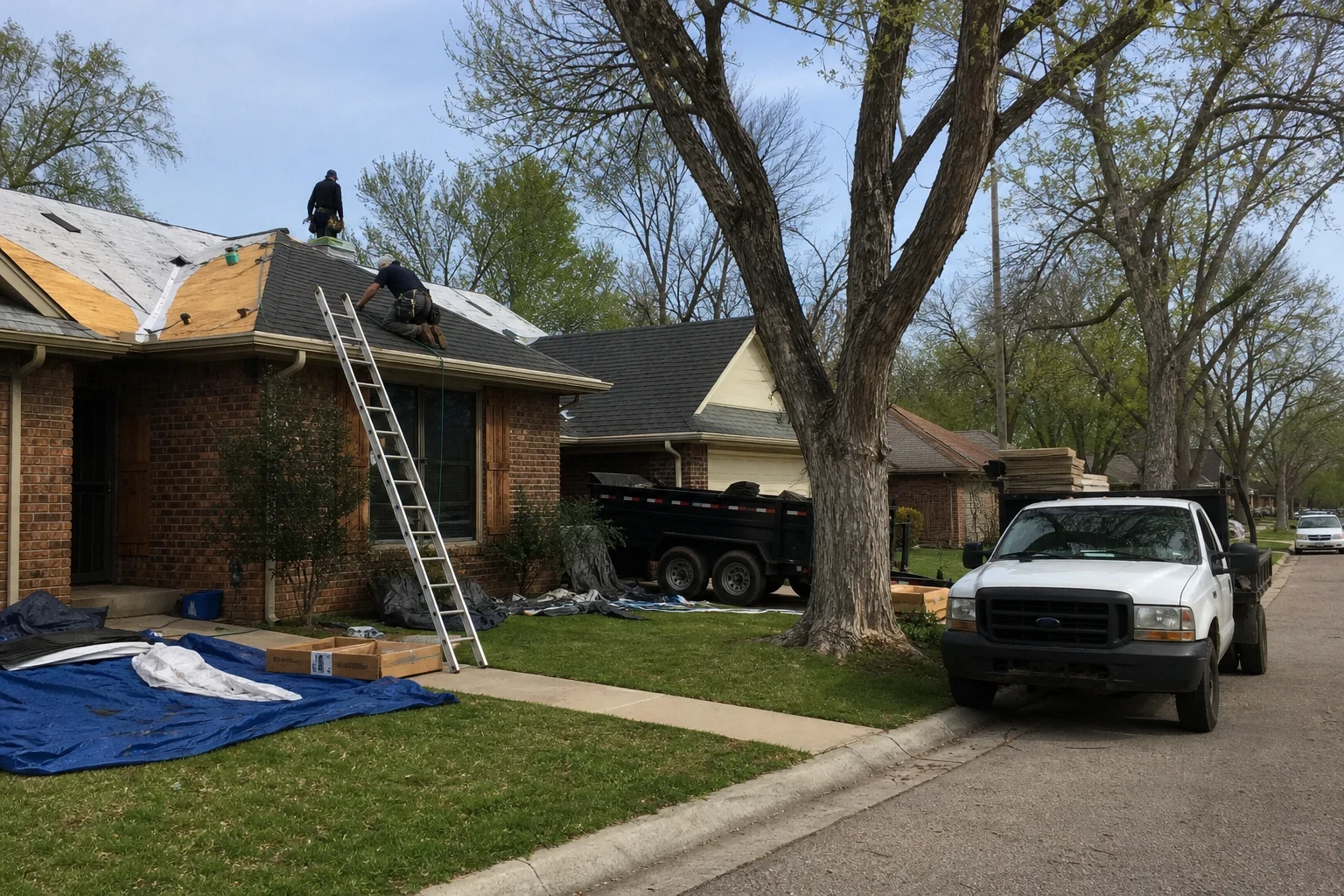
When you expect to reroof within a year or two, we usually suggest hanging the gutters afterward. The roofers install the new drip edge and gutter apron first, and the gutter then tucks correctly beneath them instead of being pulled and rehung. A roof inspection can tell you how many years your current roof likely has before you decide.
Get Gutters Matched to Your Roof
Tell us about the overflow, sagging or stains you are seeing, and we will set up a visit to measure your roof and talk through aluminum, steel and copper. You get a line-by-line quote by phone before any work is scheduled.