ServicesRoof Repair
Roof Repair in Nichols Hills, Matched to the Material on Your Roof
A leak is rarely where the stain shows up. We trace water back to the failed flashing, cracked tile or lifted shingle, explain why it failed, and repair it with parts that work with the rest of your roof instead of against it.
When Fixing Beats Replacing
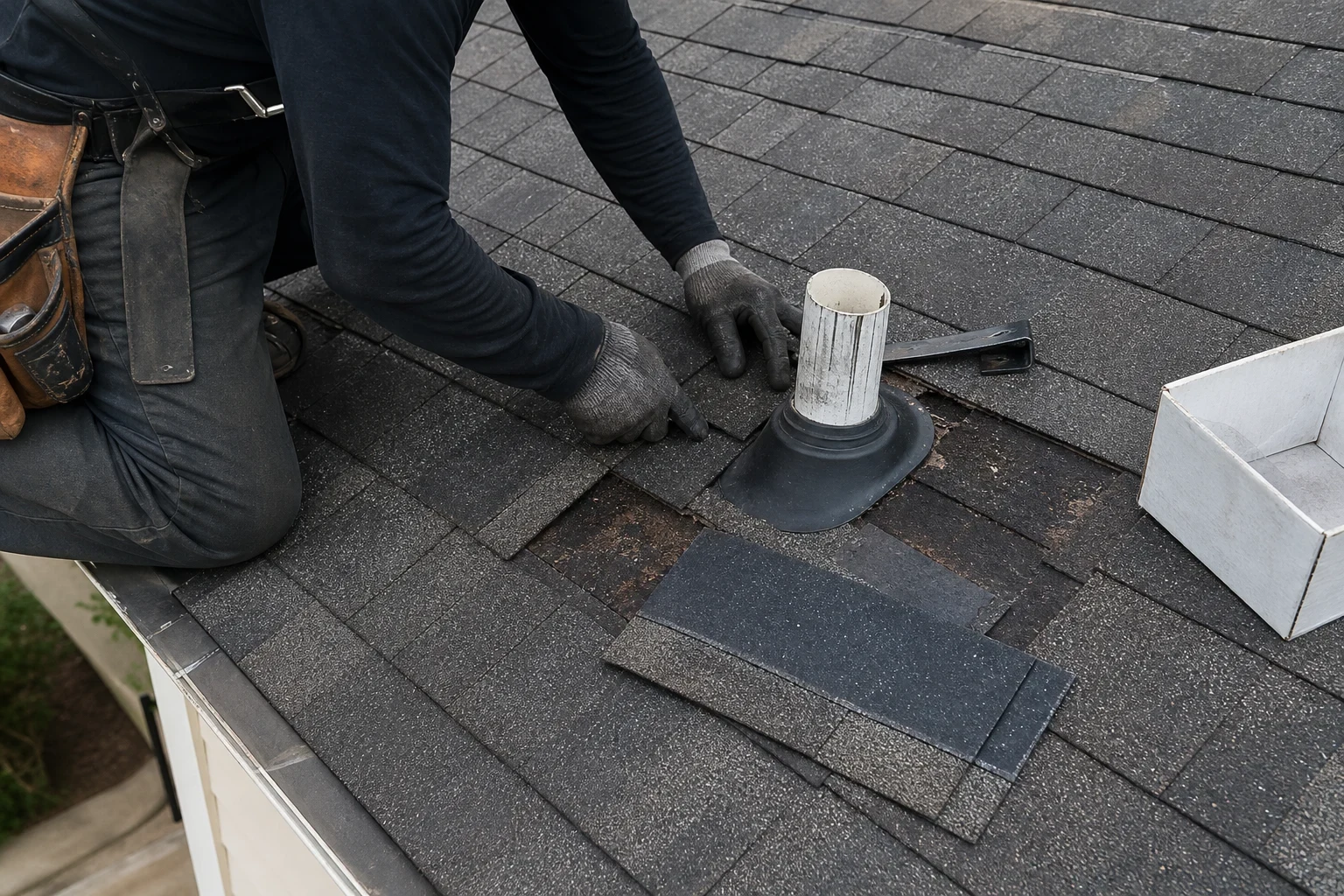
A roof usually gives way at a handful of weak points long before the whole surface wears out: a split pipe boot, a step flashing joint behind a chimney, a row of shingles whose seal let go in a wind gust. When the rest of the field is sound, repairing those spots is the honest answer, and it can buy the roof real years.
Each material fails differently. Asphalt shingles lose granules and crack along the tabs. Clay and concrete tile rarely wear out, but the underlayment beneath them does. Slate can outlast several sets of flashing. Wood shake splits and cups as it dries. Metal panels leak at fasteners and seams when washers harden. Knowing which one you have tells us where to look.
If what we find points to widespread wear, we will say so and explain the trade-off against roof replacement. Otherwise, we fix what is broken and leave the rest alone.
What Our Roof Repair Work Covers
- Leak tracing
- We follow the water path from the ceiling stain up through the attic decking to the entry point on the roof. Water often runs along rafters or underlayment several feet before it drips.
- Flashing repair
- Step flashing, counterflashing, chimney crickets and wall transitions are reset or replaced. On masonry chimneys we cut counterflashing into the mortar joint rather than relying on surface caulk.
- Shingle and tile replacement
- We replace damaged asphalt shingles, cracked clay or concrete tile, broken slate and split shakes with matching profiles. Slate gets copper nails and slate hooks, not roofing cement.
- Vent and penetration seals
- Cracked neoprene pipe boots, rusted vent flanges and loose skylight curbs are some of the most common leak sources we see. We swap them for parts rated to outlast the surrounding roof.
- Decking and underlayment patches
- Where water has softened the plywood or plank decking, we cut out the rotted section, install new sheathing and lap fresh underlayment into the existing layers so water sheds downhill.
- Metal roof fastener and seam work
- We replace failed screws and washers, reseal lap seams and correct panels that have shifted from thermal movement.
Signs Your Roof Needs Repair
Ceiling or attic stains
Brown rings on drywall or dark spots on attic decking mean water is getting past the roof surface. Even a dry stain points to a leak that returns with the next hard rain.
Missing or creased shingles
Strong spring winds can break the adhesive strip on asphalt shingles. A creased shingle has already lost its seal and will lift again.
Granules in the gutters
Heavy granule loss leaves the asphalt mat exposed to UV, which makes shingles brittle. A handful after a storm is normal; drifts of it are not.
Cracked or slipped tile and slate
Broken pieces expose the underlayment to direct sun and water. A single slipped slate can funnel rain straight onto the felt below.
Rusted or loose flashing
Lifted edges around chimneys, walls and valleys let wind-driven rain behind the roofing. Caulk smeared over old flashing usually means an earlier quick fix is failing.
Daylight in the attic
Light around vent pipes or along the ridge shows a gap that water and pests can use.
What Moves the Cost of a Roof Repair
Repair pricing depends mostly on what the roof is made of and what we find under it. A shingle swap on a walkable slope is a short job; a chimney reflash on a steep slate roof takes more time and care. We give you the price after we have seen the damage.
Roofing material
Asphalt shingles are quick to source and install. Clay tile, slate and wood shake cost more per piece and need slower handling so neighboring pieces are not broken.
Pitch and access
Steep slopes, multiple stories and tight spots near trees require more safety setup and slower work.
Damage beneath the surface
A leak that has run for months may have rotted decking or soaked insulation. That only shows once the surface layer comes off.
Matching discontinued products
Older shingle colors and tile profiles may be out of production. Finding salvaged or closely matched pieces can add time.
How a Repair Day Runs
- 1
Start with a phone call
Describe the stain, where it sits in the house and what covers your roof. Knowing whether it is shingle, tile, slate or metal lets us load the right parts for the first visit.
- 2
Inspect roof and attic
We check the roof surface, the flashing and the attic side of the decking, and take photos of what we find so you can see the damaged area yourself.
- 3
Explain the cause and the fix
You get a plain explanation of what failed, why it failed, and what the repair involves, with the price before any work starts.
- 4
Make the repair
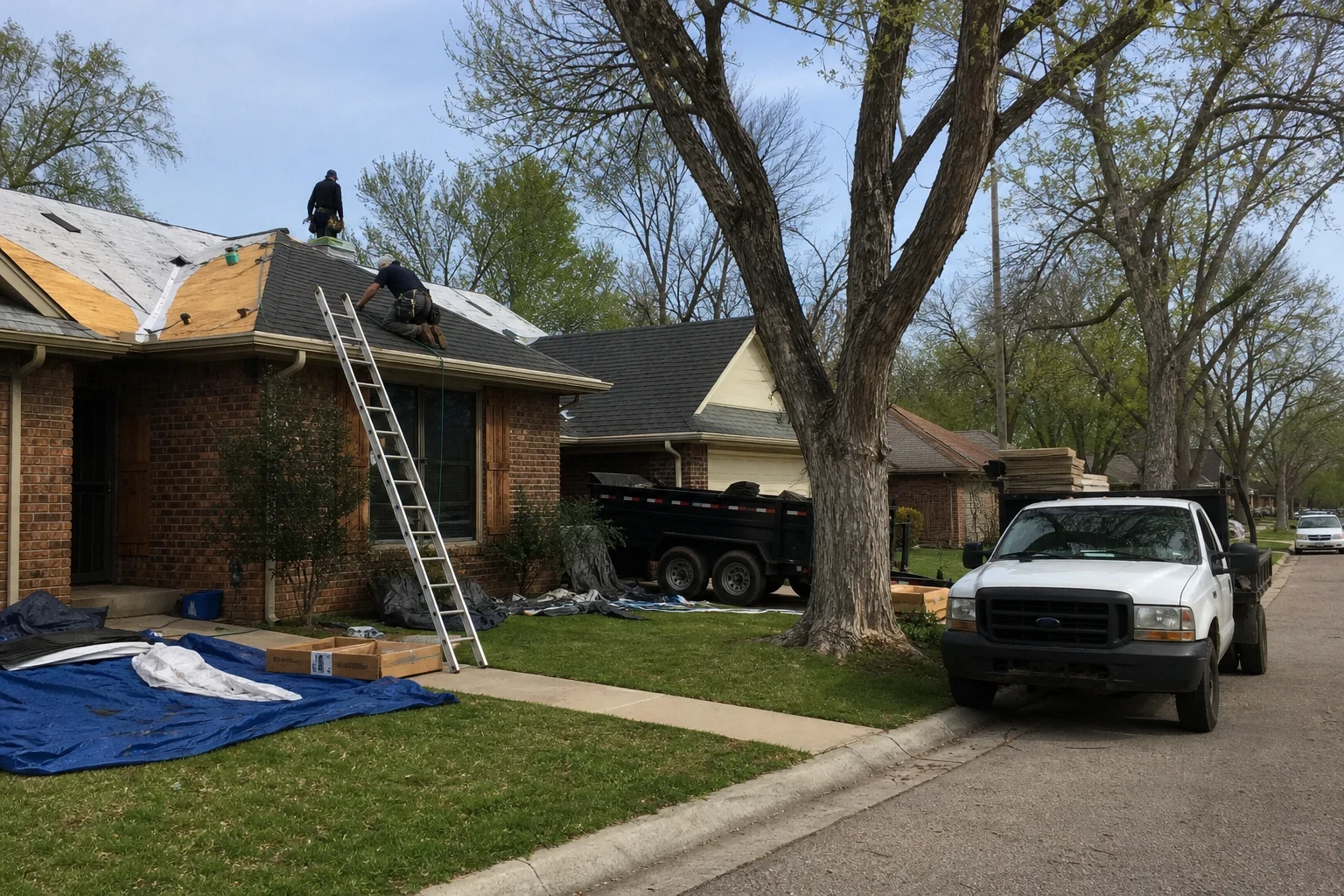
We protect landscaping below the work area, remove the failed components and install matching pieces, lapping each layer so water runs over it, not under it.
- 5
Clean up and show you
We pick up debris, run a magnet over the yard and driveway for nails, and walk you through photos of the finished work.
Roof Repair Questions
Can you match the shingles already on my roof?
Usually close, though rarely perfect. Shingles fade with sun exposure, so even the same product will look newer for a while. For tile and slate we often source salvaged pieces that have weathered the same way.
How do I know whether to repair or replace?
If the damage is limited to a few areas and the rest of the roof still has life, repair makes sense. If shingles are brittle across the whole roof or the underlayment under tile has failed broadly, patching just moves the leak. We show you photos and explain which situation you are in.
Why does my roof leak only during certain storms?
Wind direction matters. Rain blown sideways can push past flashing or under shingle edges that stay dry in a straight downpour. That pattern points us toward walls, chimneys and roof-to-wall transitions.
Is roofing cement a real fix?
Only as a short-term seal. Cement dries, shrinks and cracks within a few seasons, especially with hot summers and winter freezes. A lasting repair replaces the failed flashing or roofing piece itself.
Do you repair tile, slate and metal roofs, or just shingles?
We work on all of them. Each takes different fasteners, underlayment and handling, which is why we ask what you have before the first visit.
Find Out What Is Really Causing the Leak
Tell us what you are seeing and what your roof is made of. We will come look, show you the cause in photos and explain the repair before any work begins.