ServicesStorm Damage Repair
Storm Damage Repair in Nichols Hills for Shingle, Tile, Slate and Metal
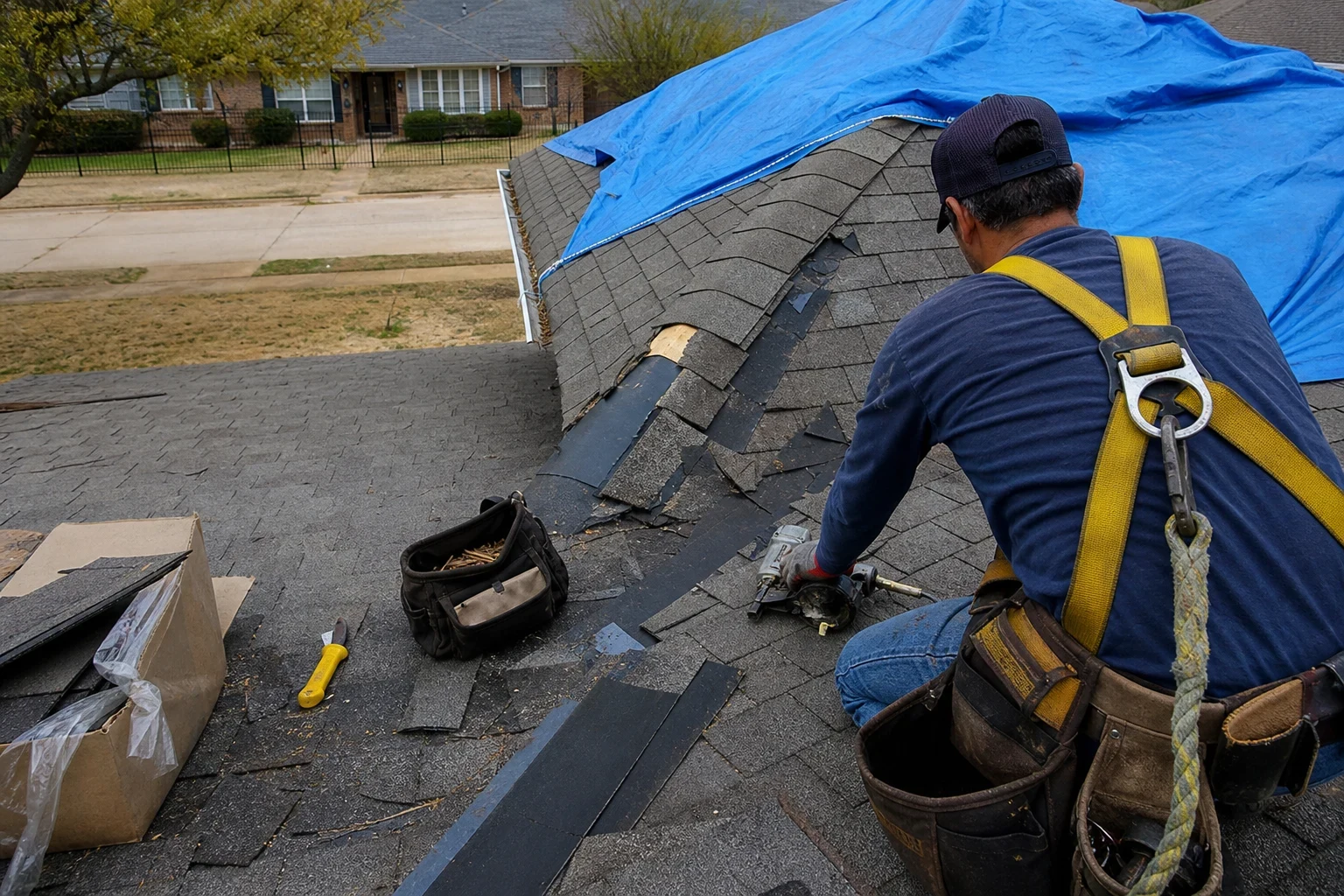
Hail and wind damage looks different on every type of roof. A bruised asphalt shingle, a cracked clay tile and a dented metal panel each need their own fix. We find what the storm actually broke on your home, photograph it and repair it with matching pieces so the roof sheds water again.
What storm damage repair covers
Storm damage repair is the work done after hail, high wind or wind-driven rain has broken part of your roof system. That means the surface layer you can see from the yard, and also the parts under it: underlayment, step and counter flashing, ridge vents, pipe boots and the roof deck itself.
Each material fails in its own way. Asphalt shingles lose granules where hail strikes, which exposes the asphalt mat to sunlight and shortens its life even before anything leaks. Clay and concrete tile crack or chip at the nose. Slate fractures along its grain. Metal dents, and on thinner gauges a hard strike can split a seam or loosen a fastener. Wood shakes split and open gaps for water. Knowing which failure you are looking at decides the right repair.
Central Oklahoma's spring hail and summer straight-line winds mean most roofs take a hit at some point. When damage is limited to a few areas, a targeted repair restores the roof. When it is spread across most slopes, we tell you so plainly and walk you through Roof Replacement instead.
What the repair work includes
Damage mapped slope by slope
We check every slope and mark hail hits, creased tabs and missing pieces with chalk, then photograph them with a scale reference. You see the same pictures we use to write the scope.
Replacement pieces that match
Shingles are matched by manufacturer line and color where they are still made. Tile and slate are matched by profile, size and thickness. If an exact match is discontinued, we show you the closest options before anything goes on your home.
Underlayment and decking
When wind peels shingles off, the felt or synthetic underlayment beneath is often torn or soaked. We replace damaged underlayment and any decking that has gone soft, so new shingles or tile are nailed into solid wood.
Flashing, vents and pipe boots
Hail cracks plastic vent caps and splits the rubber collars on plumbing boots. We replace those parts and reset or replace flashing that wind has lifted at walls and chimneys.
Gutters and downspouts
Hail dents aluminum gutters and wind pulls hangers loose. We repair or replace damaged runs, and our Gutters page covers the options for new ones.
Temporary cover when needed
If a section is open to weather before replacement pieces arrive, we cover it with a secured tarp to limit water getting inside.
Signs a storm damaged your roof
Granules piled in gutters
Heavy drifts of sand-like granules at downspout outlets after a hailstorm mean shingles were hit hard enough to shed their protective surface.
Dents on soft metal
Dings in gutters, downspout elbows, vent caps or the fins on your AC unit show how large the hail was. If soft metal is dented, the roof above took the same hits.
Creased or missing shingles
Wind lifts a tab, breaks its sealant strip and leaves a horizontal crease. A creased shingle cannot reseal, so it usually lets go in the next storm.
Cracked or shifted tile and slate
Look for broken corners, shards in the flower beds or pieces sitting out of line with their neighbors. A slipped piece exposes the underlayment to direct sun and rain.
New stains after wind-driven rain
A ceiling stain that shows up after a storm often points to lifted flashing or torn underlayment rather than a hole in the surface. Those leaks are easy to misread from inside.
How a storm repair job runs
- 1
Start with a phone call
Describe what you saw after the storm and what kind of roof you have. We agree on a day for an on-site visit.
- 2
Roof and attic check
We walk each slope and look in the attic where it can be reached, then explain the damage slope by slope and by roof type. If you open an insurance claim, our photos and notes are yours to hand to the adjuster. We can describe how claims usually move, but coverage is the adjuster's call.
- 3
Written scope and estimate
You get a line-item estimate that lists every component, the square footage and any flashing or vent parts, so you can see exactly what you are paying for.
- 4
Repair day
We protect landscaping and walkways, remove damaged pieces, replace underlayment where needed and install matching shingle, tile, slate or metal. Before we leave, we magnet-sweep the yard and driveway for nails.
- 5
Final walk-through
We show you the finished area with photos and point out anything we noticed that is worth watching on the rest of the roof.
What drives the cost of a storm repair
Storm repairs are priced from the damage we actually find, not a flat rate. Two houses hit by the same storm can need very different work. These are the factors that move the number most.
- Roof material
- Asphalt shingle repairs use common, stocked products and go quickly. Clay tile, slate and standing-seam metal need specialty pieces and slower handling, since a careless step can break more than the storm did.
- How far the damage spreads
- Fixing one wind-torn slope is a different job from replacing hail-struck shingles on four slopes. Spread is also what tips a repair toward replacement.
- What is under the surface
- Wet decking or torn underlayment often only shows once the damaged layer is lifted. If we find it, we photograph it and talk with you before adding it to the job.
- Finding a match
- Discontinued shingle lines and older tile profiles may need salvaged or special-order pieces, which adds sourcing time and cost.
- Pitch and access
- Steep pitches and second-story eaves need more safety setup and staging, which adds labor hours.
Storm damage questions we hear
Something not covered here? (572) 234-9322
Do I need to file a claim before you look at the roof?
No. Plenty of people have the damage checked before deciding anything, so they know whether a claim makes sense. We record what we find, and filing is your choice. We are not your adjuster, and your insurer decides what is covered.
Can you fix just the damaged area, or do I need a new roof?
It depends on how widely the damage spreads and on the material. Scattered wind damage on shingles or a handful of cracked tiles is usually a repair. Hail bruising on most slopes of an aging shingle roof often makes replacement the better use of money, and we will explain why.
Will the new shingles match my old ones?
We match by manufacturer, product line and color when they are still available. Even an exact match will look a little brighter at first, because your existing shingles have weathered. The difference usually fades over a season or two in the sun.
My roof is not leaking. Can hail damage still matter?
Yes. Hail that knocks granules off a shingle exposes the asphalt to UV, and that spot wears out years ahead of the rest. Cracked tile can sit dry for months while the underlayment below it breaks down.
How soon after a storm should the roof be checked?
Before the next round of rain if you can. Creased shingles and lifted flashing get worse with each storm. Please stay off the roof yourself; wet or broken surfaces are slippery and easy to damage further.
Do you repair metal, tile and slate, or only shingles?
We repair all of them. Each material has its own fasteners, flashing details and walking rules, and we plan the repair around those so fixing one area does not crack or dent another.
Find out what the storm actually did
Tell us your roof material and what you noticed after the storm. We will set up an inspection, photograph the damage and give you a written repair scope.