ServicesRoof Inspections
Roof Inspections in Nichols Hills
We inspect your roof according to what it's made of. Asphalt shingles, clay tile, slate, wood shake and metal each fail in their own way, so we look for those specific failures, photograph what we find and tell you whether it needs repair, replacement or nothing at all.
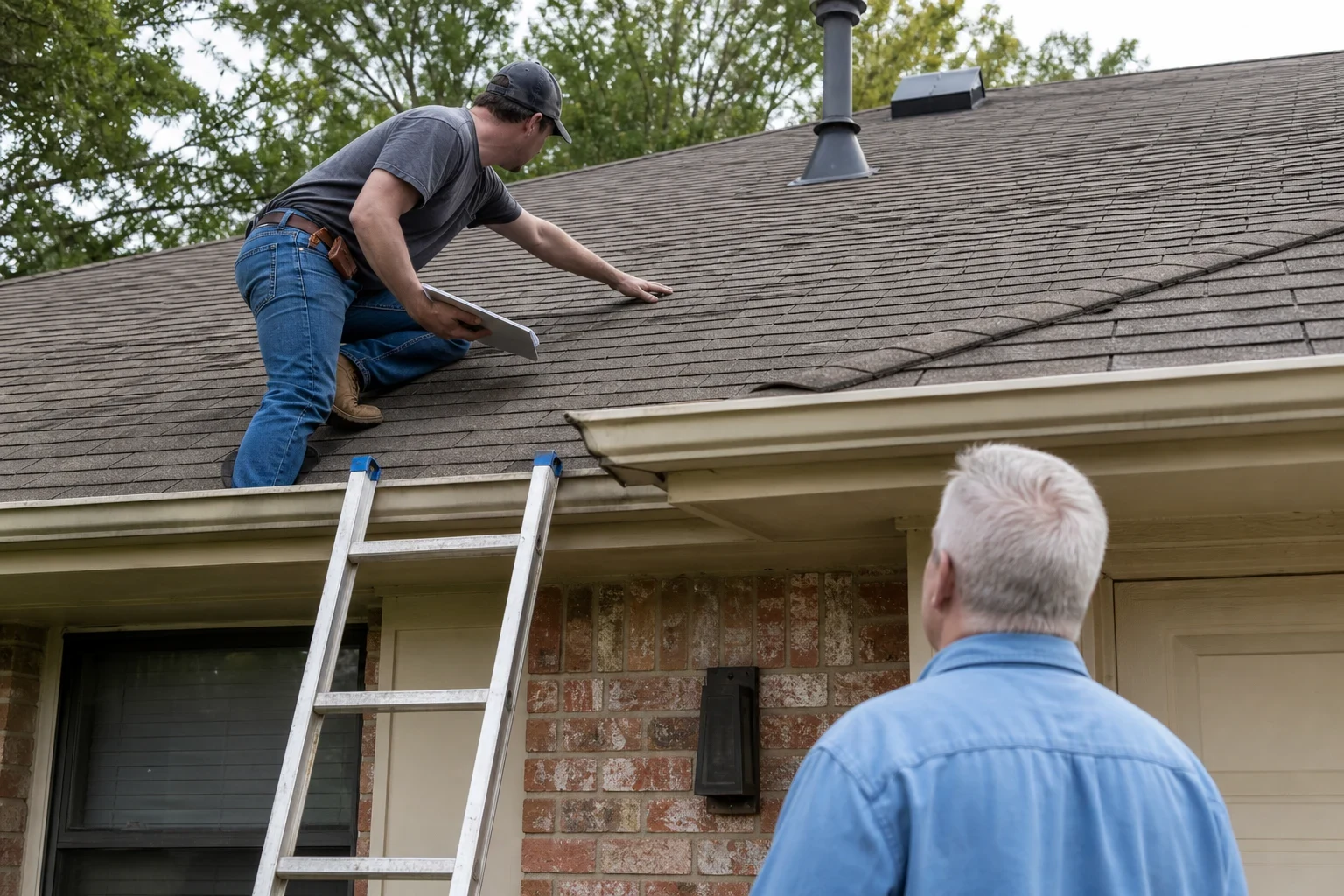
What a Good Inspection Should Tell You
A roof inspection answers three questions: what condition the roof is in, why, and how much useful life it has left. The why matters most. A curled shingle can mean age, but it can also mean a hot, poorly vented attic cooking the mat from below. Replacing shingles without fixing the airflow just starts the clock again.
Material drives what we look for. On architectural asphalt shingles we check granule loss, cracked tabs and failed seal strips. On clay or concrete tile the tiles often outlast the underlayment beneath them, so we look for slipped pieces and signs the felt has dried out. Slate gets checked for delamination and rusted nails, wood shake for splitting and cupping, and metal for backed-out fasteners and worn neoprene washers.
You get a plain account of what we saw, with photos, and an honest call on whether the roof needs roof repair, a full roof replacement, or simply another look in a year.
What We Check on Your Roof
The roofing surface
We walk the field of the roof where the covering allows it and look for the wear patterns that covering is known for. Hail bruising on shingles, cracked tile corners and delaminating slate all read differently, and we note each by location.
Flashing and penetrations
Most leaks start at transitions, not in the open field. We check step flashing along walls, chimney counterflashing, valley metal, pipe boots and skylight curbs. Cracked rubber pipe boots are one of the most common failures we find on roofs past ten years old.
Decking and attic
From the attic we look at the underside of the decking for water stains, dark rings around nails and soft or delaminated plywood. Daylight showing where it shouldn't tells us exactly where to look again from above.
Ventilation
Air should enter low through the soffit vents and leave high through the ridge vent or roof vents. When those two sides are out of balance, summer heat and winter moisture build up in the attic, which shortens shingle life and can rot decking from the inside.
Edges and drainage
We check drip edge, fascia and how water leaves the roof. Clogged or sagging gutters back water under the first course of shingles, so we note anything our gutters service should address.
A photo record
Each finding gets a photo tied to where it is on the roof. You see what we saw without climbing a ladder.
Signs It's Time for an Inspection
A hailstorm went through
Spring hail can bruise shingles and crack tile without leaving anything visible from the ground. Bruised shingles lose granules over the following months, and that's when leaks show up.
Shingle grit piling up at downspouts
Any freshly installed shingle roof sheds some loose granules at first. When an older roof sheds enough to collect in the gutter troughs or fan out below the downspouts, the asphalt is losing its UV shield and will age quickly from here.
A water spot overhead
Before it drips, water can run along a rafter or the underside of the decking for several feet, so the spot on your ceiling seldom marks where it got in. Following that path back to the entry point is part of the inspection.
Your roof is reaching its expected age
Standard three-tab shingles, architectural shingles, tile and slate have very different lifespans. Knowing where yours stands lets you plan instead of reacting.
You're buying or selling your home
A roof-specific inspection goes further than a general home inspection and gives both sides a clear picture of what the roof needs.
How the Inspection Visit Goes
- 1
A short talk first
We ask what prompted the call, how old the roof is and whether it has had past repairs. Old patches and layered shingles change what we look for.
- 2
Ground and attic check
We walk around your home to look at slopes, gutters and flashing from below, then check the attic if there is access. This tells us where to focus once we're up top.
- 3
On the roof
We inspect the surface, flashing, penetrations and edges, photographing as we go. On tile or slate we step only where the pieces can take weight, or work from a ladder to avoid cracking them.
- 4
Findings explained
We walk you through the photos, explain the cause behind each issue and give you our honest read: leave it, repair it, or start planning a replacement.
What Moves the Price of a Roof Inspection
Two things set the price: how much roof there is and how much work it takes to examine it without damaging anything. A single-story home with a plain shingle roof goes quickly, while a steep, multi-level tile roof takes much longer. We'll give you an idea of what to expect on the phone.
- Roofing material
- Shingle and metal roofs can usually be walked. Clay tile, concrete tile and slate need careful foot placement or ladder work, which takes longer.
- Size and pitch
- Larger roofs with steep slopes, dormers and multiple valleys have more flashing and more surface to check, and steep pitches need extra safety setup.
- Attic access
- An open, accessible attic lets us check decking and ventilation directly. Tight or blocked access adds time.
- Purpose of the report
- A routine checkup is quicker than a detailed record for a home sale or for an insurance claim after storm damage.
Roof Inspection Questions
Something not covered here? (572) 234-9322
How much time should I set aside for the visit?
Plan on roughly one to two hours for a typical roof. Large, steep or tile roofs run longer, and so does a roof carrying years of old patches to sort through. We take our time in the attic, since what we find there often explains what we see from above.
Will walking on my tile or slate roof damage it?
It can if it's done carelessly. Clay tile and slate crack under point loads, so we step only on supported areas such as the headlap where pieces overlap, or inspect from ladders and edges. If a section can't be reached safely, we tell you rather than guess.
Can you help after a storm with an insurance claim?
We can document damage with photos and explain what we found in plain terms you can share with your insurer. We don't act as your adjuster or decide your claim. If repairs are needed, our storm damage repair service picks up from there.
How often should my roof be inspected?
Once a year is reasonable for most roofs, plus a check after any significant hail or wind event. Older roofs and those with past leak history benefit from closer attention.
Is the inspection just a way to sell me a new roof?
It shouldn't be, and ours isn't. A lot of what we find is handled with a replacement pipe boot, resealed counterflashing or a handful of new shingles. You see each photo and the cause behind it, and when we do recommend replacement, we explain why a repair on that particular roof would not last.
Know What Your Roof Needs Before It Leaks
Tell us what your roof is made of and what you've noticed. We'll set up a visit and give you a clear, photographed account of its condition.